
Start a Troy Resident Search
Troy has no public master list of every resident. The strongest Troy residents directory result comes from a short chain of records, each kept for a different purpose. City PROS can connect a current parcel to the roll owner. The Rensselaer County Clerk can connect a recorded instrument to its parties. Troy directories can place a name at an address in a selected year. Court and vital-record routes have narrower rules. First decide whether the question concerns a current parcel, a historic household, an estate, or a protected life event.
Use two independent anchors before connecting a person to a Troy address. A name plus an SBL, a directory year plus a deed, or a court file number plus a date is stronger than a name alone. An owner, grantee, court party, executor, licensee, and resident are separate roles. A Troy residents directory search should preserve the role as the source gives it.
- For a current Troy address, search City PROS by one field and record the SBL, situs address, roll year, and owner label.
- Open the Troy parcel map or tax map to check the municipality, section, and surrounding parcel geometry.
- For a transfer, use the County Clerk’s land-record route and retain the parties, recording date, and instrument reference.
- For an earlier Troy household, compare annual directories and House Directory years at the Troy Room before drawing a conclusion from one volume.
- When a record is not online, ask the keeper for the exact series, date range, copy type, fee, and access rule rather than requesting a newly created list.
Note: A dated record can confirm an association, but it does not make a blanket claim about a person’s current location.
Troy Residents Records Desks
Different Troy records are held at different desks. The City Assessor maintains the assessment context for Troy parcels. The County Clerk keeps recorded land instruments and several county series. The Board of Elections handles registration questions and permitted voter-file requests. The City Clerk routes municipal services and vital records, but it is not a citywide resident roll. The full parcel-by-parcel route belongs in the Troy street records reference.
Rensselaer County Elections
116 Pinewoods Avenue
Troy, NY 12180
518-270-2990
Troy Parcel Search Fields
The City PROS landing page presents three quick ways into the current Troy roll. Search SBL when a parcel identifier is already known, address when the property is known, or owner name when the roll name is the best lead. City PROS advises using one criterion rather than combining them. A resulting card should be treated as an assessment snapshot, not a deed and not proof that a roll owner occupies the property.
| City PROS field | Input | When it helps | Record to retain |
|---|---|---|---|
| SBL | Optional text | Direct parcel route | Parcel identifier and card date |
| Address | Optional text | Locate a Troy situs address | Returned property address |
| Owner Name | Optional text | Find roll-associated parcels | Owner label and roll year |
The visible portal also links assessment information, property inventory, comparable sales, and an inventory correction request. Advanced filters, export controls, exact partial-name behavior, and the complete live field labels were not exposed in the research pass, so a Troy search should not assume features the portal has not confirmed.
Note: Save the search date with a PROS result because the assessment roll and displayed parcel fields can change over time.
Troy Deeds Follow Parcels
A Troy owner name is the bridge, not the finish line. The County Clerk’s published availability schedule lists real-property data and images from 1989 forward. For 1973 through 1989, the online/index-book route is grantee data only. Earlier deed research can require the Records Room, historic books, Family History Library film guidance, or a library route. When a modern deed is found, use the grantee, grantor, legal description, recording date, and book/page or instrument number to step backward.
Recorded grantor and grantee addresses can be mailing facts from the transaction date. They may differ from a Troy situs address. A parcel can also belong to an estate, trust, or entity. The record supports a transfer or an ownership role. It does not list every person who lived at a property.
- Assessment roll
- A dated administrative record that can identify a parcel and roll owner.
- Index
- A finding tool that points to a record; it is not always the full document image.
- Parcel or SBL
- A property identifier used to reconcile assessment, map, and deed research.
- House Directory
- Troy’s verified address-first directory route from 1915 onward, used for period household leads.
Current Troy Residents Sources
Current Troy resident directories are purpose-built sources, not interchangeable lists. The assessment roll is useful for a parcel and owner label. Court systems identify a party’s role in a case. The voter self-service form is for the registered voter’s own record. The County Clerk index identifies recorded-document parties. Each record has a date, scope, and access rule. Use the source that matches the question instead of trying to turn a Troy residents directory into a census.
| Source | Who It Lists | Keeper | Access |
|---|---|---|---|
| City PROS assessment roll | Parcel and roll owner | City Assessor | Online search |
| NY voter self-service | Submitted voter’s registration and poll details | State Board of Elections | Own-record workflow |
| County land index | Grantors, grantees, and instruments | County Clerk | Online route and Records Room |
| Troy GIS and tax maps | Parcel geometry and map context | City and county mapping routes | Map viewer and office route |
| TRIP/RCHR directory | Community association context | TRIP/RCHR | Association directory, not a roster |
For a one-person question, preserve the name as printed and add an address, date, SBL, or case number before comparing sources. A careful resident lookup records those independent anchors without turning a same-name hit into a claim.
Troy Voter Records Have Limits
The New York voter lookup asks for county, last name, first name, date of birth, and ZIP so a registered voter can check registration, poll-site, or mail-ballot information. It is not a general Troy resident directory. A blank result can reflect data entry, a changed record, a confidential registration, or another coverage issue. It does not establish that a person is unregistered.
Individual voter-data requests are controlled by Election Law §3-103(5) and require an elections-purpose statement. New York’s confidential-voter rules also protect qualifying records. The state’s Flateau database, effective April 1, 2026, makes aggregate non-identifying election data more visible but does not open an individual resident roster. The County Board’s current page says its office moved to 116 Pinewoods Avenue on July 7, 2026.
Note: Use the Board of Elections for corrections or a properly scoped request, and keep submitted date-of-birth information private.
Troy Postal Labels Need Checking
A Troy mailing label is not always a Troy municipal boundary. USPS material places 12180 with the Troy Post Office, identifies 12182 with Lansingburgh, and associates 12183 with Green Island. Historic Lansingburgh was annexed to Troy in 1900, while Green Island is an Albany County municipality in the postal-area context. Use USPS for a mailing result, then test the parcel with PROS, SWIS, city limits, and GIS before deciding which local office holds the record.
The same caution applies to a mailing address in an assessment or deed. It may identify where a tax bill or recorded notice was sent, not where the owner lived. Troy maps provide spatial context, but the research did not capture a verified live ArcGIS search-field sequence. A parcel popup and tax-map section should be recorded separately.
Note: Treat a postal label, municipal label, and parcel identifier as separate facts until the cited records align.
Troy Official Sources Compared
Official records and commercial compiled profiles answer different questions. A Troy assessor card, a County Clerk instrument, or a library directory has a named custodian, date, and record role. Commercial profiles can be stale, combined across people, or drawn from another jurisdiction. For Troy research, follow the custodian’s correction route when an official record appears wrong and keep the underlying source rather than relying on a summary profile.
| Source type | Strength | Limit to state |
|---|---|---|
| Official Troy or county record | Custodian, record type, and date are identifiable | May show a role rather than residence |
| Library or archive collection | Useful historical name and address leads | Coverage can have missing years or indexes |
| Commercial compiled profile | May suggest a search lead | Can be stale or conflated; verify at the source |
Troy Protected Records Stay Limited
Troy birth and death records are not ordinary FOIL records. Certified copies have eligibility rules, and genealogy requests have age and proof thresholds. The City registrar is the local route for a Troy event; the New York State Department of Health has the statewide route outside New York City. Court records can be sealed or marked not public, and Address Confidentiality Program participants use a substitute address under Executive Law §108.
FOIL is still useful for existing city records such as a dated permit file, policy, or nonexempt municipal record. A request should describe the record and date range. Troy accepts requests through its GovQA route, can redact protected material, and lists an appeal path through Corporation Counsel. Courts and vital records follow their own custodians and rules.
Troy FOIL Requests Need Detail
A Troy FOIL request works best when it asks for an existing city record with a defined date range. A dated permit file, a code record, or a policy list is more usable than a request for staff to produce a new directory or answer a research question. Troy’s FOIL instructions route online requests through GovQA. Do not include a Social Security number or date of birth in a public description. The City may redact protected material and release the separable remainder.
Under New York’s Freedom of Information Law, an agency generally must grant, deny, or acknowledge a reasonably described request within five business days. An acknowledgment normally supplies an approximate further date, usually no more than 20 additional business days. Troy lists paper-copy charges of 25 cents per page or the actual reproduction cost where applicable, and some large digital transfers can involve CD and postage charges. A City FOIL appeal goes to Corporation Counsel within 30 days. Court files, births, deaths, marriages, and confidential voter information use different custodians or rules.
When the desired material sits with the County Clerk, a court clerk, the Troy registrar, or a state office, send the narrow request to that keeper. Naming the record series, the relevant year, and any instrument, case, or parcel identifier saves time and reduces the risk of an incorrect response.
Historical Troy Residents Directories
The Troy Room reports printed Troy city directories that are nearly complete from 1829 to the present. Hart Cluett describes a Troy directory collection spanning 1832 to 1999. Annual volumes can provide names, addresses, occupations, ward clues, and removals. From 1915, the House Directory creates the local address-first route. Those volumes are a period record, not a complete census and not an ownership certificate.
For a directory year that is absent online, check the Troy Room’s print and microfilm holdings before concluding that the household is missing. Ancestry Library Edition covers Troy directory full text from 1857 through 1947, with documented exceptions including 1900, 1904, 1921, and 1936 through 1946. The Troy City Directory collections reference has the year runs, abbreviations, newspaper companions, and repository access details.
Troy Room Adds Local Context
The Troy Public Library’s genealogy collection brings directories together with newspapers, family histories, photographs, censuses, local vital indexes, and maps. Its Troy Room is open during normal library hours, though the inner room is closed and researchers should ask the Information Desk. Remote help is available, with a stated response window of one to two months. This makes the library a practical fallback when a Troy online index begins too late.
Hart Cluett Historical Society adds more than 33,000 noncirculating local-history items, including directories, maps, architecture files, family material, and partial title-search files. Its research-library appointments are recommended one week ahead; it lists Thursday evening, Friday, and Saturday access, plus a paid research-request service. The collections provide Troy context, while the County Clerk remains the official source for an instrument.
Note: A directory, map, or archive index is a lead; confirm important family, parcel, or estate claims with the appropriate primary record.
Troy State Search Screens
Some Troy questions need a state system rather than a local roll. New York’s official license verification can confirm a public license status or credential. It is not a residence record. The state custody locator has its own coverage and exclusions, so an absent name is not a universal conclusion. Both tools should be read as the state labels and dates their results.
Use the NYSED Online Verification for a public professional-status check. The source image below shows the state verification entry point. It is useful when a Troy name must be distinguished by a licensed role, but it should never be used as a substitute for a Troy parcel, court, or directory record.
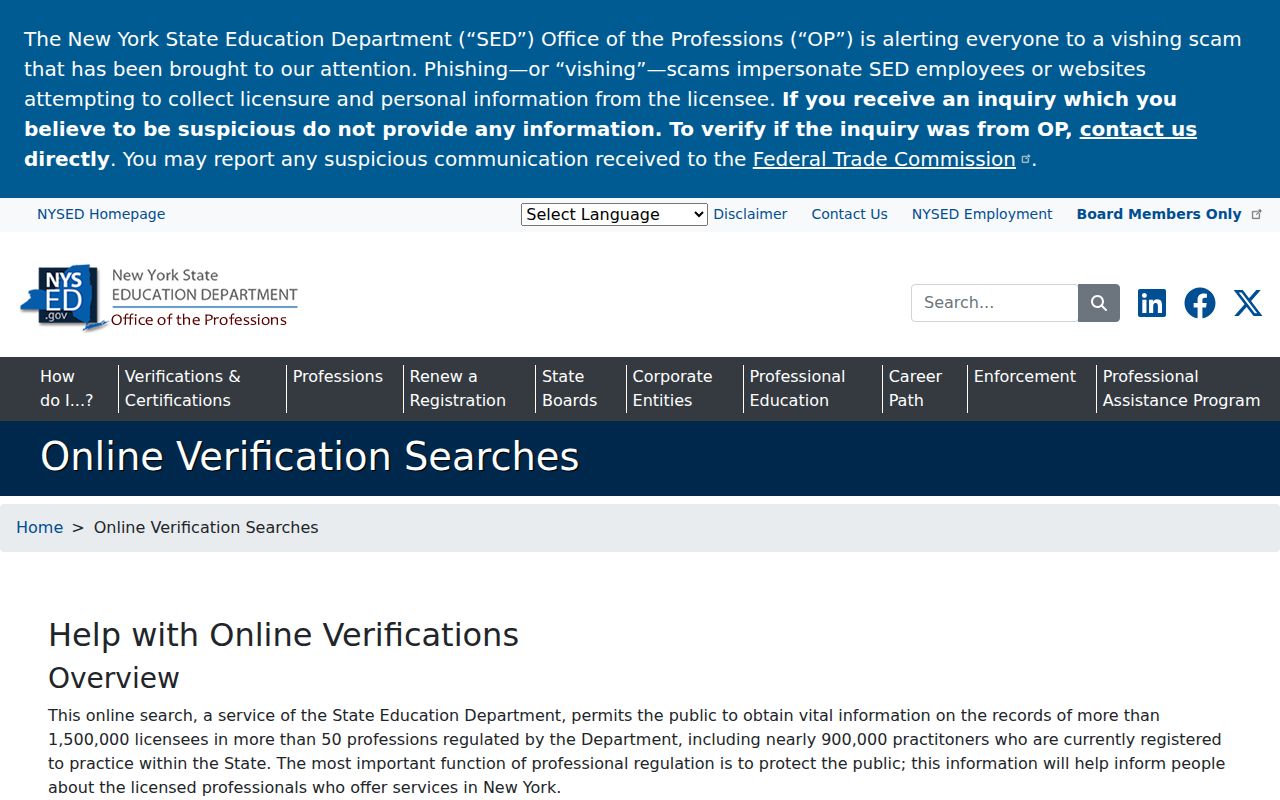
The verification route returns source-specific public fields, such as a profession, license number, location, original license date, and registration status. Record the result date and compare it with a separate Troy anchor.
Troy Results Need Source Dates
The New York incarcerated-individual lookup is another official state route with a defined scope. It accepts identifiers or name and birth-year fields, but it excludes some records and is not a Troy residency history. Preserve the database date and the result’s own definitions. Do not turn a blank result into a broad statement about a person.
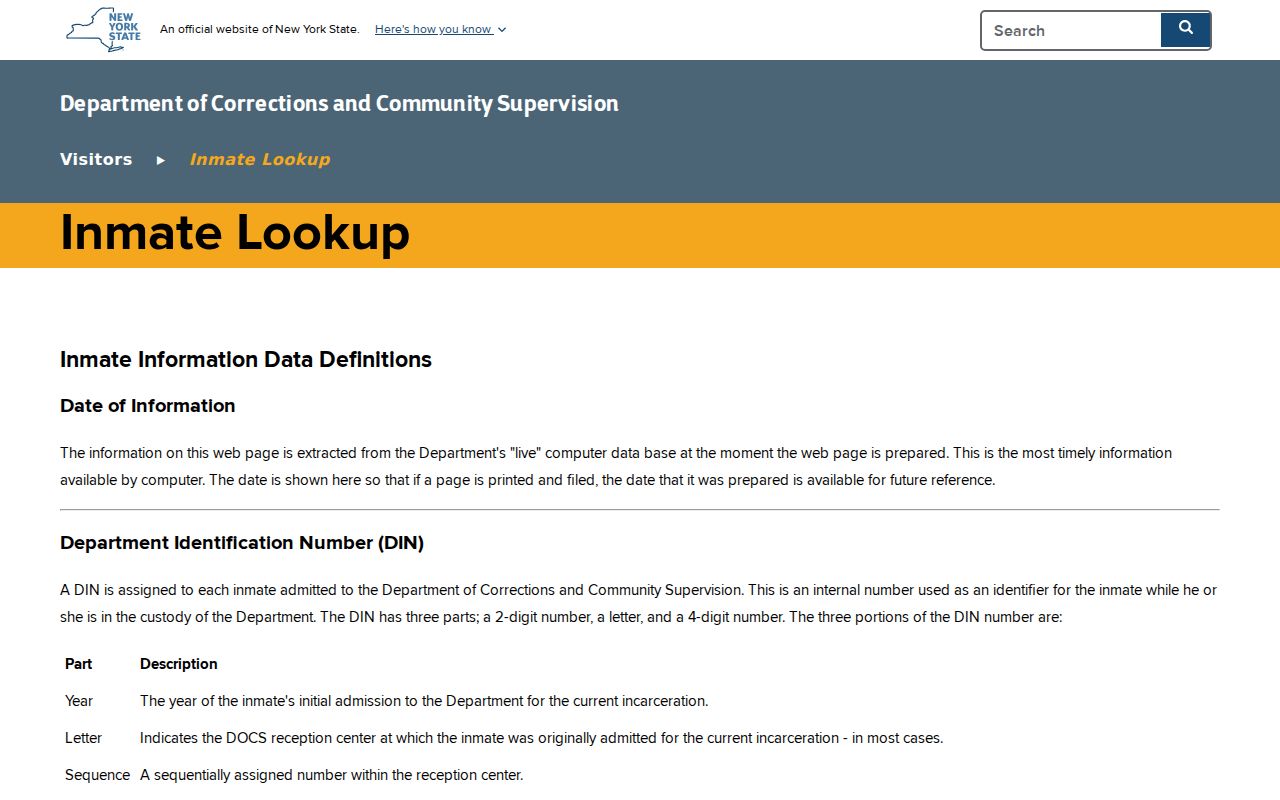
For Troy research, a state screen works best as one dated item in an evidence ledger. Add the official URL, the field used, the access date, and another independent Troy record when an identity question depends on it.