
Troy City Directory Collections
The strongest historical directory route is the Troy Public Library's printed run, which the library describes as nearly complete from 1829 to the present. Hart Cluett Historical Society describes a related Troy directory collection from 1832 through 1999. Those statements identify collection coverage, not a promise that every volume is digitized or that every name was indexed. The library also identifies a 1915-and-later House Directory for an address-first search. It is the verified local option when a building number is known. Start with the collection that matches the question, then retain the title page, date, and page image with any notes.
| Collection | Years | Where Held | Access |
|---|---|---|---|
| Troy printed directories | 1829-present, nearly complete | Troy Public Library Troy Room | In person during normal library hours |
| HCM Troy directory collection | 1832-1999 | Hart Cluett Historical Society research library | Noncirculating; appointment recommended |
| Troy House Directory | 1915 onward | HCM finding-aid collection and local library research | Address-first research route |
| Ancestry Library Edition scans | 1857-1947, selected run | Troy Public Library | Library-use full text |
Ancestry's available Troy scans omit 1900, 1904, 1921, and 1936-1946 according to the library. A missing scan therefore describes the digital run, not a person's absence from Troy. The printed, microfilm, catalog, and finding-aid paths remain important when a search box has no hit. Publisher names and annual volume titles vary, so confirm those details from the actual volume rather than carrying them forward from a search result.
Note: Record the directory year and source location before comparing entries from different collections or formats.
Troy Room Directory Shelves
The Troy Room's genealogy and local-history collection brings directories together with newspapers, photographs, family histories, census material, and local books. Its outer room is open to the public during normal library hours, while the inner room is closed, so ask the Information Desk for material or help. Troy Room books do not circulate. The Upper Hudson Library System catalog, the card catalog, and vertical files can help identify a title before a visit. Remote research help is available by email, although the library gives a response estimate of one to two months.
The Troy Room collection page is a useful way to confirm the research route before handling a volume.
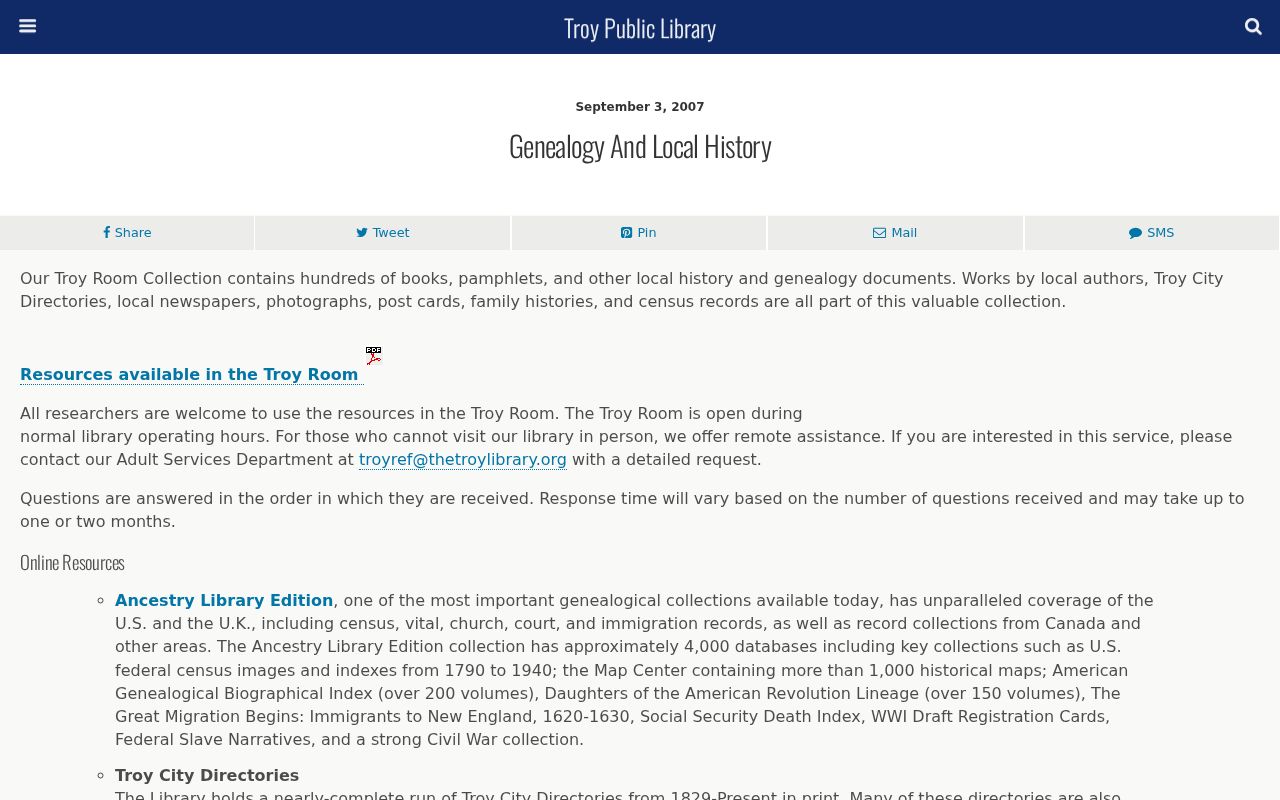
Use the displayed collection as a starting point, then preserve the precise book, film, or database citation for each annual directory finding. That distinction helps another researcher return to the same edition instead of relying on a general library reference.
Troy Directory Scans and Gaps
Library-use access to Ancestry Library Edition can help with the available full-text directory years, and the Troy Room also points researchers toward FamilySearch and New York resources. Keep the original spelling, initials, and address beside every result. A directory may list heads of household and people over 20, rather than every person connected to an address. Annual listings can also include street names, wards, businesses, schools, churches, and organizations, making the volume useful for context without proving every part of a household.
The Troy history archive entry point is another route into digitized local material. Its presence does not confirm that a particular city-directory year or entry is online. Save the collection title, object URL, date range, and image page whenever an online object is located. That record keeps a changing archive search from becoming an unsupported citation.
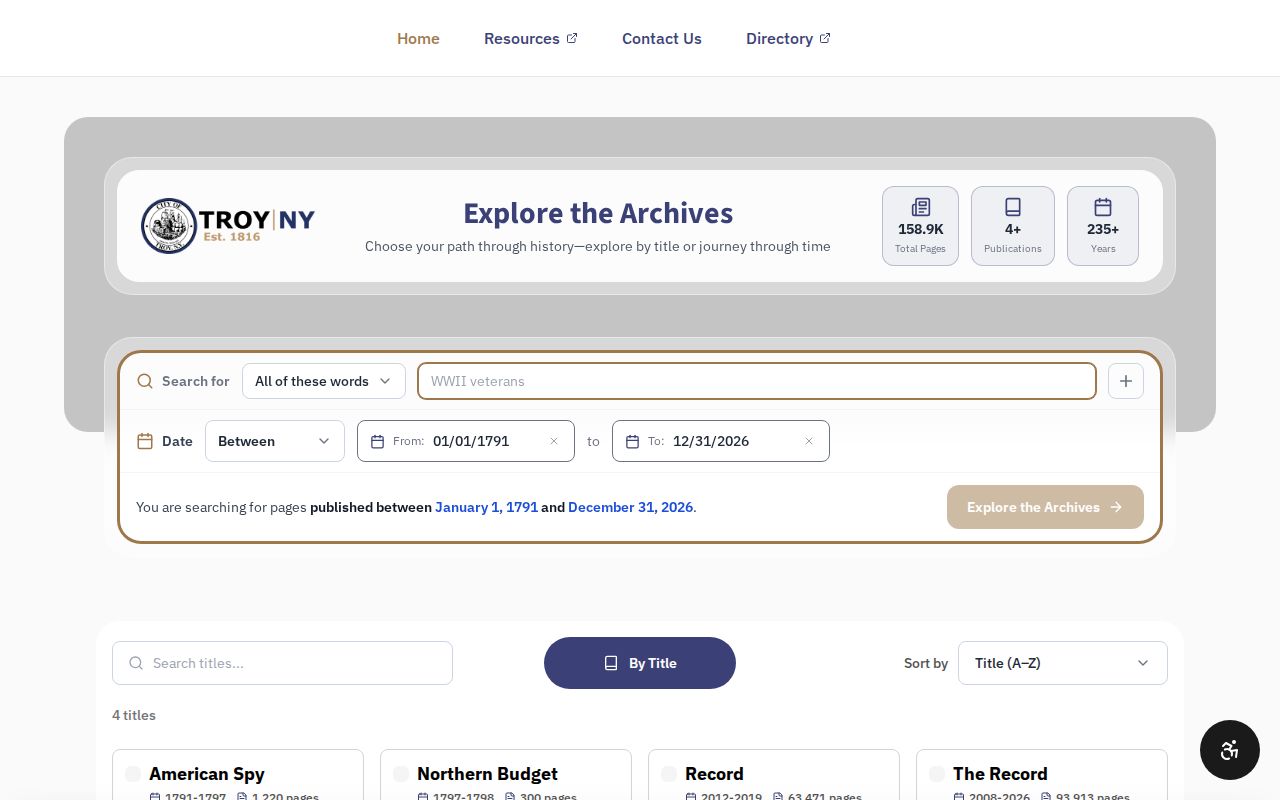
Digitized material can speed a name search, but the local library and HCM remain the fallback for a missing year, an unindexed page, or a source that exists only on site.
Troy Directory Holdings at HCM
The Hart Cluett finding aids identify directory, map, house-history, Surrogate, and special-collection routes. HCM is a noncirculating research center with more than 33,000 items, including directories, maps and atlases, photographs, family histories, diaries, letters, scrapbooks, business records, and ephemera. Its internal finding aids are not all digitized. That makes a catalog result useful, but not a substitute for asking staff whether a relevant folder, title-search file, or directory volume is available.
Appointments are recommended a week ahead. HCM lists Thursday evening hours, Friday and Saturday afternoon hours, admission charges for some visitors, and a paid research-request service that normally takes six to eight weeks. A request can be practical when travel is not possible, but it should name the person, address, year range, and record type as narrowly as possible.
The HCM finding-aid page shows the repository route used for these local holdings.
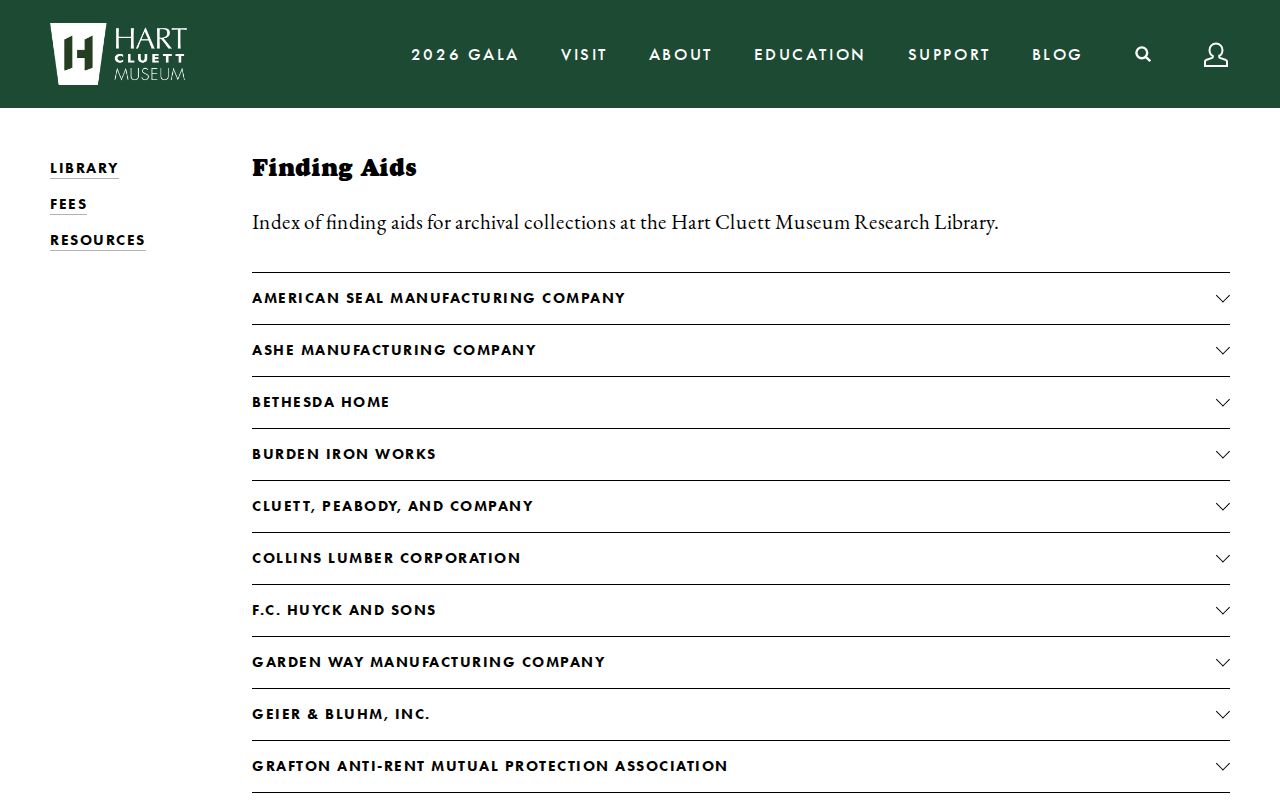
HCM's collection is especially useful when a directory lead needs a map, family file, or another local source that provides the period context missing from a single listing.
Reading a Troy City Directory
No image-level sample entry was captured for this research, so the source volume should be read rather than reconstructed from a modern pattern. The supported inventory is limited to fields the local guide identifies. A yearly entry may give a printed name, address, occupation or profession, directory inclusion context, street or ward clues, and, when present, a removal note. Some Troy directories include death dates in the 1880-1960 period. Treat such a date as a lead for an obituary, cemetery, probate, or eligible vital-record request, not as a replacement for one.
| Printed name | Copy the name, initials, spelling, and order exactly as the volume gives them. |
|---|---|
| Address | Keep the house number and street form beside the directory year. |
| Occupation or profession | Record only what the entry actually prints. |
| Directory context | Note head-of-household or over-20 inclusion when the volume indicates it. |
| Street, ward, or removal clue | Preserve the original wording and use it to select the next source. |
- Criss-cross directory
- No standalone Troy title was confirmed in the TPL or HCM material. Do not assume one exists; the verified 1915-and-later House Directory is the local address-first alternative.
- House Directory
- An address-search resource that begins in the HCM description in 1915. Search the building number and street, then retain the year with the resulting name.
- Abbreviation key
- A set of printed short forms. TPL lists examples including ab. for above, al. for alley, h. for house, and opp. for opposite; preserve the original form in notes.
Lansingburgh in Troy Directories
Lansingburgh can complicate a Troy directory search because it was an independent village with a 1770 grid and an 1788 expansion before its 1900 annexation to Troy. Earlier records can use village language while later material uses Troy streets or wards. From about 1860, directory coverage may also bring in Lansingburgh, West Troy or Watervliet, Cohoes, Waterford, and Green Island. A nearby place name is a search lead, not proof that records describe the same municipal address.
Compare the street, ward, date, and source title before joining two entries. The Central Lansingburgh Historic District covers properties around 110th through 120th Streets, adding another historic label that can appear beside present Troy municipal terms. No complete official citywide street renumbering or renaming table was located. Use an old street-name crosswalk only when a cited source supplies it.
Note: Keep historic village and present municipal labels in separate fields when recording a Troy directory result.
Trace Troy Directory Households
A household trail becomes stronger when each annual listing is paired with another dated record. The library recommends tracing a surname or address year by year, then checking intervals of three to five years to save time. Compare several adjacent years when a name disappears, because an omission, removal, move, or indexing gap can produce a false endpoint. When a historical address needs a later identity check, the separate Troy resident lookup route can help label modern records without turning an old directory entry into a current-residence claim.
- Locate the earliest likely annual entry and record the page image, printed name, street, and year.
- Check the next annual volumes, then use three-to-five-year intervals to identify moves, removals, or changed spellings.
- For a 1915-or-later address, consult the House Directory and retain the building number exactly as printed.
- Pair the directory date with federal or New York State census material held locally, keeping the two sources distinct.
- Use newspapers, the vital indexes, cemetery material, or probate as follow-up leads when the directory trail stops.
Federal Rensselaer census material held locally reaches 1790-1940, while the library also lists New York State census microfilm for 1855, 1865, 1875, 1905, 1915, and 1925. Census and directories use different collection rules and dates. Agreement between them supports a dated association, while a conflict should remain in the notes until a primary record resolves it.
Troy Directory Leads in Newspapers
Troy Public Library holds newspaper material from 1787 to the present in print and microfilm, although individual titles have gaps. Its bound Troy and Lansingburgh vital indexes cover newspaper entries from 1787-1895. Card indexes cover deaths and marriages from 1882-1900 and births, deaths, and marriages from 1975-1992. The scrapbook index reaches 1804-1969. Each is a finding aid, so copy the surname, first name, date, newspaper, location, and cited source before requesting or viewing the underlying issue.
Named resources include Obituary Notices Troy 1797-1860 and Lansingburgh obituary and marriage material from 1787-1895. A marriage index can point to both parties. A newspaper item can also explain a removal note or an address change between annual volumes. Exact holdings vary by title, so check the library's microfilm list before expecting a particular issue.
Troy Directory Years Timeline
The key dates below show why the local shelf and the address-first route should be used with a time window. They are collection and jurisdiction markers, not evidence that every record in a period is online or complete.
| 1791 | Rensselaer County begins; earlier context may sit in Albany County records. |
|---|---|
| 1829 | TPL's nearly complete printed Troy directory run begins. |
| 1832 | HCM describes the start of its Troy directory collection. |
| 1900 | Lansingburgh is annexed to Troy, changing the municipal label encountered in later sources. |
| 1915 | HCM describes the House Directory address-search era. |
Troy Directory Research Scale
Two local collection measures explain why a careful historical directory search can branch into more than one room or catalog. TPL reports directories nearly complete from 1829 to the present. HCM holds more than 33,000 local-history items, with directories only one part of a wider research library. Those figures make a useful comparison: the library offers a long annual run, while HCM can supply maps, local histories, family materials, and finding aids that put a directory result in context.
Use the smallest useful request. A full name, a variant spelling, a year range, a street, and the record type give staff a workable starting point. If no result is located, describe the collection and years searched rather than claiming the household was not in Troy. That wording respects known scan, index, and holdings gaps.
Note: A directory result is best recorded as a dated listing, not as a permanent statement about a person's address.